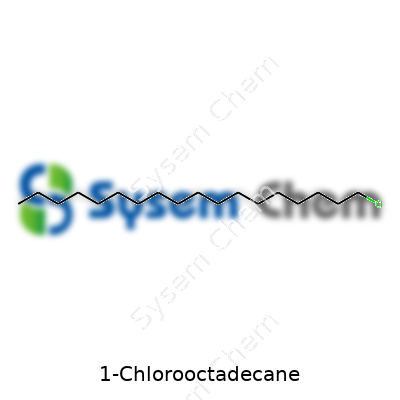
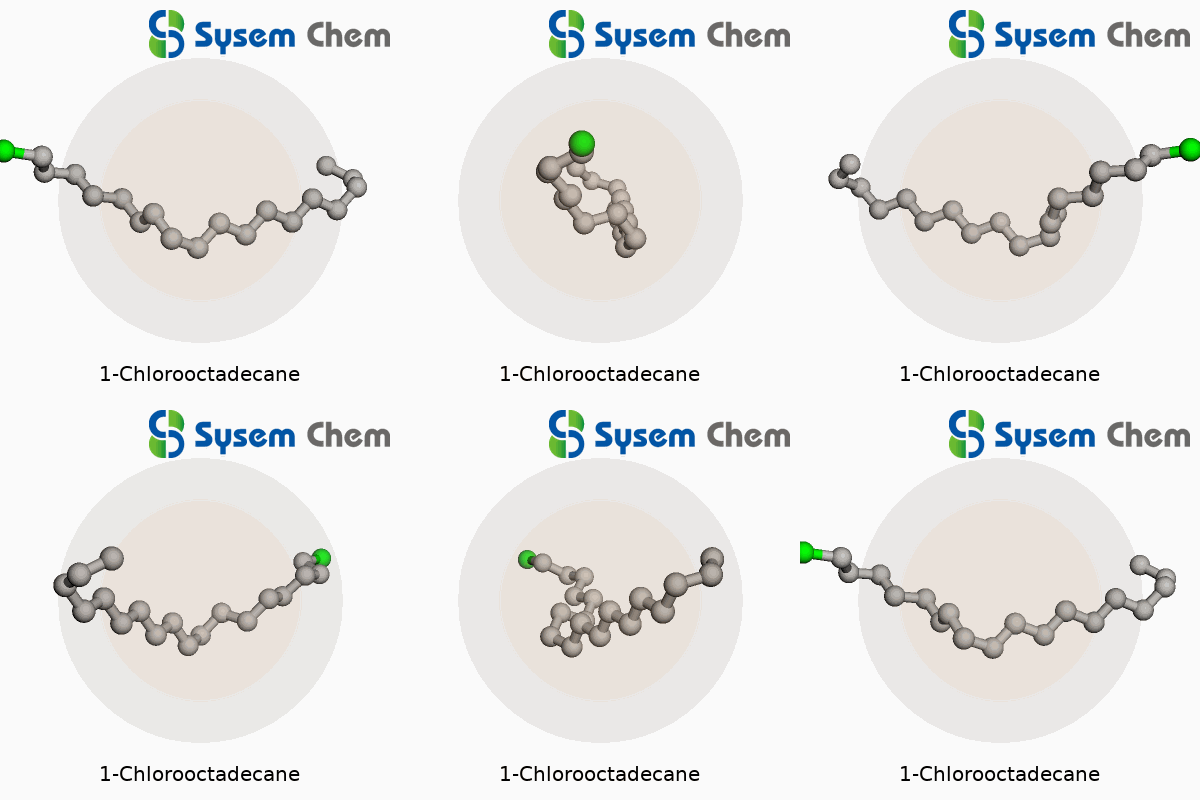
1-Chlorooctadecane: Exploring Its Journey, Uses, and Safety
Historical Development
The story of 1-Chlorooctadecane starts with advances in organic chemistry over a century ago. As chemists explored the halogenation of long-chain hydrocarbons, they bumped into a set of compounds now known for their contributions to both industry and research. Much of the early work focused on understanding how alkyl chains interact with different halogens to modify physical and reactive properties. These investigations not only shaped current practices in chemical synthesis, but also connected 1-Chlorooctadecane to industries dreaming up new surfactant blends, specialty lubricants, and chemical intermediates. Testing and refining methods over decades brought consistent quality, which proved critical as purity levels directly influence end-use performance. Academic curiosity led to more reliable syntheses that extended the range of available chlorinated paraffins. Progress moved step by step—from academic projects confined to glassware all the way to industrial-scale reactors, each stage pushing the compound into new roles.
Product Overview
In practical terms, 1-Chlorooctadecane holds a specific place in chemical inventories as an 18-carbon chain capped with chlorine. Whether serving as a textile finishing agent, intermediary in organic reactions, or building block in surfactant mixtures, this compound gets chosen for its well-defined behavior and ease of modification. Companies and labs reach for it whenever a straight-chain chlorinated hydrocarbon is called for and the project needs reliable performance in nonpolar environments. Suppliers offer it as a colorless solid or clear liquid depending on storage temperature. Packaged in chemical-grade containers, it finds its way to projects ranging from pilot scale to full production in sectors such as plastic manufacturing and emulsifier design.
Physical & Chemical Properties
With a melting point sitting around 25–30 °C and boiling point up near 370 °C, 1-Chlorooctadecane stands as a waxy solid at room temperature but transitions into a clear liquid in slightly warmer conditions. Its density hovers close to 0.85 g/cm³, making it lighter than water, while its solubility remains low in aqueous environments but quite nonchalant in organic solvents like ether and chloroform. Its molecular structure grants it hydrophobic qualities, helping it blend smoothly with oils and paraffins. Chemists appreciate that its long carbon chain stabilizes the otherwise reactive chlorine, lending a measure of robustness during storage and manipulation. Its single chlorine handle also offers a target for transformations, but the rest of the molecule resists breakdown under standard conditions, which appeals to industries needing stable additives.
Technical Specifications & Labeling
Most suppliers guarantee a purity greater than 95%, listing comprehensive spectral data—such as infrared and NMR profiles—to assure composition. Labels routinely show chemical formula (C18H37Cl), molecular weight of about 288.95 g/mol, and regulatory codes like UN numbers. Storage demands dry, well-ventilated areas, kept away from oxidizing agents and extreme heat. Product Safety Data Sheets flag compatibility and restrict mixing with strong acids or bases, all while emphasizing tight-sealed containers to keep out moisture. Bulk shipments highlight hazard statements concerning flammability and potential environmental impact, underlining the need for cautious handling from the warehouse through the laboratory bench.
Preparation Method
The typical synthesis involves direct chlorination of n-octadecane using gaseous chlorine in the presence of light or catalytic agents. This photochemical substitution allows the selective replacement of one hydrogen on the chain with a chlorine atom. Careful temperature control and slow reagent introduction avoid over-chlorination—a step that chemists find directly affects product quality. Post-reaction, the mixture undergoes washing, distillation, and sometimes recrystallization to yank out unwanted byproducts and secure the desired degree of purity. Many labs rely on anhydrous conditions to keep hydrolysis at bay, often using inert gas blankets or desiccators throughout the process. Attention to reaction time and chlorination intensity can tip the balance between a successful run or stumbling into multi-substituted byproducts nobody wants.
Chemical Reactions & Modifications
1-Chlorooctadecane serves as a versatile raw material for further syntheses. The terminal chlorine stands ripe for nucleophilic displacement, swapping out with functional groups such as thiols, amines, or azides under well-chosen conditions. This lets researchers construct tailored surfactants, lubricants, or drugs by latching on polar heads, thus increasing water compatibility. Oxidation approaches can nudge the alkyl chain toward carboxylic acid formation, yielding long-chain fatty acid derivatives. Coupling reactions, often driven by transition-metal catalysis, let chemists append aromatic or heterocyclic units for advanced material science. Unlike smaller alkyl chlorides, the hydrophobic backbone steers the molecule toward nonpolar use, and slowed reactivity at the α-carbon sometimes means longer reaction times or heightened reagent strengths are a must. Environmental chemists have pointed out that degradation processes usually begin with the cleavage of the chlorine—an aspect of growing interest in pollution studies.
Synonyms & Product Names
Depending on the catalog or region, you’ll see 1-Chlorooctadecane called n-Octadecyl chloride, Octadecane-1-chloride, or simply Stearyl chloride. Some older texts mention N-octadecyl monochloride, though newer publications favor the systematic variant. International inventories, such as those kept under REACH or the US TSCA, tend to standardize on one or two preferred synonyms for clarity, reducing confusion when shipments cross borders or researchers scan technical libraries. These varying names crop up in patent filings, chemical supply lists, and regulatory submissions across major chemical markets.
Safety & Operational Standards
Direct handling calls for gloves, goggles, and lab coats to guard against skin and eye exposure. Good lab practice advocates for well-ventilated hoods, limiting inhalation risk. In the event of a spill, absorbent pads backed by chemical disposal protocols kick in, never sending waste product into water systems. Regulatory bodies categorize the compound as hazardous in cases where large quantities pose flammability or environmental threats. Worker training forms a backbone for preventing improper handling or accidental mixing. Regular audits encourage full compliance with standards laid out by OSHA in the US and REACH in Europe, with inspection checks covering label accuracy, shelf-life monitoring, and emergency response readiness. Even routine use means thinking through compatible materials—polyethylene containers beat out metals prone to corrosion here. Safe disposal practices demand incineration in licensed facilities, since backyard dumps create toxic byproducts, not to mention legal headaches.
Application Area
Industrial customers look to 1-Chlorooctadecane for its role in manufacturing surfactants, lubricants, and certain types of waxy coatings. Textile finishing agents built from the compound help fabrics resist water or dirt. Polymer researchers include it as a modifying agent to adjust the flow and texture of plastics. Its long hydrocarbon tail finds favor in emulsifier blends and personal care product formulations where a water-repellent touch comes in handy. In the arena of organic synthesis, it acts as a precursor to quaternary ammonium salts and other cationic surfactants. Some electronics firms harness its properties to protect metal surfaces during wafer production or to reduce static. Much of the usage pattern reflects its chemical stubbornness—heat, alkali, and acids don’t break it down readily, so it endures through tough industrial processes that leave weaker compounds in tatters.
Research & Development
Researchers regularly test new reactions starting from 1-Chlorooctadecane, probing its value in green chemistry, new biodegradable emulsifiers, or specialty coatings that shrug off weather, oils, or pollution. Many labs focus on functionalizing the chain in milder conditions, aiming for selective substitution to build complex molecules from a simple template. Material science teams experiment with stearyl derivatives to tweak the hydrophobic surface of nanomaterials or polymers. Environmental scientists investigate ways to accelerate or predict its environmental breakdown, contributing useful insights into pollution management. Patent activity has ticked up in recent years, with makers seeking to lock in proprietary methods for surfactant production or lubricant improvement. Every project that asks for a long, controlled hydrocarbon backbone seems ready to benefit from a fresh look at this versatile chemical.
Toxicity Research
Toxicologists track acute exposure effects, typically finding limited dermal irritation or low acute toxicity in animal models. Problems most often stem from chronic inhalation of vapors at high temperatures or persistent environmental buildup rather than sharp, immediate health crises. Environmental risks get more attention—chlorinated long-chain compounds often hang around in soil and water, slowly breaking down and potentially accumulating in the food chain. Studies keep tabs on breakdown products, hunting for links to carcinogenic or endocrine-disrupting effects observed in related compounds. Modern testing emphasizes alternative solvents and collection techniques that minimize human or wildlife contact. Regulators push for more transparency, requiring updated toxicology dossiers before approving new uses or relaxing existing restrictions. Worker health programs stress education to catch early signs of allergy or sensitivity among frequent handlers.
Future Prospects
Developments in sustainable chemistry push researchers to re-examine chlorinated alkyl chains like 1-Chlorooctadecane for greener synthesis methods and safer, biodegradable replacements. Smart applications in materials science—think anti-fouling coatings or novel self-organizing monolayers—draw interest for their potential to improve durability or reduce reliance on silicone alternatives. Environmental scrutiny means future production relies on cleaner, less wasteful chlorination routes and end-of-life protocols that guarantee responsible breakdown rather than landfill persistence. As regulatory frameworks shift, users weigh the health and ecological trade-offs in long-term planning. The conversation doesn’t stop in the lab; product stewardship shapes both innovation and the growing movement toward safer, more transparent supply chains. New surface-active agents and functionalized derivatives promise to keep this compound on the drawing board for scientists who like straight answers and robust, hydrophobic building blocks.
Everyday Chemistry in Industry
Anyone who’s spent much time in a lab or worked with chemical formulations knows straight-chain chlorinated hydrocarbons pop up in all kinds of places. One compound, 1-chlorooctadecane, might sound like something best left to researchers in white coats, but it shows up in more industries than people realize. This chemical features an 18-carbon backbone with a chlorine atom at one end, making it valuable for specialty tasks in both manufacturing and research settings.
Uses Across the Manufacturing World
In the chemical industry, 1-chlorooctadecane often acts as a starting material. Its long carbon chain gives it unique properties for making specialty surfactants and detergents—these are substances that help oil and water blend. The textile field uses surfactants like this to treat fibers before dyeing or finishing, helping upgrade color quality and consistency.
Plastic production relies on unique additives to adjust flexibility, appearance, and performance. Companies sometimes choose 1-chlorooctadecane as a plasticizer, helping to fine-tune the feel or strength of plastic goods. Instead of a plastic gadget snapping in cold weather, it remains usable longer. Every improvement reduces waste, drives efficiency, and changes how ordinary folks experience household and industrial products.
Research and Laboratory Value
Research labs frequently pull from specific chemicals when building more complex molecules. Organic chemists use 1-chlorooctadecane as a building block in synthesis. Access to efficiently chlorinated long-chain hydrocarbons helps speed up new material development—especially in pharmaceuticals and specialty coatings. I’ve seen labs use it to design test agents or solvent blends with uncommon properties, which lets scientists work out problems others haven’t solved.
Impact on Everyday Life and Environmental Risks
Most people never interact directly with this compound, but their daily experience gets shaped by what manufacturers do with it. Every time a coating prevents corrosion or a fabric resists a stain, behind the scenes, chemistry plays its part. At the same time, chlorinated hydrocarbons can raise some smart questions about environmental persistence. Like many in its class, this compound doesn’t break down quickly—so good management matters. Waste requires careful handling to avoid polluting water supplies or soil. I’ve worked with teams where responsible waste programs made a big difference, both for local communities and the companies’ reputations.
Finding Safer Alternatives
Pushes for safer and greener ingredients spur some companies to look for replacements or to reformulate processes. It’s not always simple—sometimes the alternatives cost more, or they don’t perform as well. Still, public demand for sustainability, regulatory standards, and investor pressure nudge the industry in a safer direction.
Chemists and engineers keep searching for compounds that match performance without long-term ecological impact. It pays off, over time, because companies that embrace these changes often earn trust and gain market share. Thoughtful choices about specialty chemicals shape both what ends up in the environment and what lands on store shelves.
Maintaining Safety and Transparency
Industries working with chemicals like 1-chlorooctadecane owe clear communication to buyers, regulators, and anyone living near a plant. Labeling, disclosures, and up-to-date safety data protect both workers and the broader public. Access to information means families, consumers, and small businesses make informed decisions and ask the tough questions. From my experience, open dialogue improves quality and trust, making the whole system stronger for everyone.
Breaking Down the Structure
1-Chlorooctadecane looks like a mouthful, but the idea behind it stays pretty simple. Picture a straight chain of eighteen carbon atoms. That long spine wraps up a good chunk of the fat molecules we find in biology, and on the first carbon atom, there's a chlorine atom attached. The chain doesn’t bend or branch off; it sticks to a clear-cut, linear pattern. Its chemical formula goes as C18H37Cl.
Why Get the Formula Right?
Mistakes in chemistry formulas do more than confuse students. Whoever’s working in labs, factories, classrooms, or handling regulatory work relies on the exact names and formulas. A single digit off, or a misplaced atom, leads to wasted resources or, worse, a safety risk.
With 1-chlorooctadecane, getting that "1-" matters. Move chlorine anywhere else on the chain, and you end up with a completely different molecule, paired with a completely different set of properties. When I worked alongside chemistry students in college, I saw long chains like this often tucked away in bottles on storage shelves. One missed label left people re-checking safety sheets, wary about which gloves or containers to use. Missteps like this can spark a mess, chemically and financially.
Uses and Industry Impact
This chemical appears in the world of surfactants and specialty waxes. Its hydrophobic tail lets it help separate oils and water or line up molecules in coatings. As environmental rules get tighter, businesses have to remember every atom, especially those like chlorine, which brings both benefits and baggage. Regulatory agencies flag chlorinated organics for their persistence and possible health effects. Firms that use 1-chlorooctadecane stay on guard, tracking disposal and examining alternatives that match function but lighten the environmental footprint.
Experience in the Lab and Classroom
I remember handling alkyl halides with a sense of respect. Mishandling wasn’t an option. The faint scent, that odd, almost waxy touch—these signals came with the lesson that chemicals, especially organohalogens, bring potential hazards. A bottle marked C18H37Cl summoned careful calculation before mixing or disposing, a habit drilled into any safe lab hand.
For newcomers and professionals alike, clear labeling keeps workflows honest. If a shipment turns up missing the full formula or chooses old names, confusion takes over quickly. Companies do better by keeping training up to date and double-checking shipments before signing off. These steps save both hassle and money.
Looking Forward: Getting Chemical Communication Right
Sharing exact chemical information isn’t just for chemists. It reaches transport drivers, warehouse staff, and even emergency responders. Accurate tracking lets everyone step in safely if a spill or mix-up occurs. More digital tools can help spot formula errors before they land on a drum or slip into a digital inventory. Software can flag the difference between 1-chlorooctadecane and its isomers, blocking mistakes before they spread.
Every industry that handles big molecules like C18H37Cl faces a simple but important responsibility: keep details clear, keep everyone safe, and keep costs and waste down.
Why Safety with Chemicals Matters
Anyone who’s ever spent time in a lab or on a factory floor will tell you: chemicals can surprise you. Just because a compound doesn’t fume or smell strong doesn’t mean it won’t cause harm over time. 1-Chlorooctadecane, a synthetic chlorinated hydrocarbon, has commercial use in lubricants, coatings, and chemical synthesis. It’s easy to underestimate the danger, especially if you’ve handled solvents or reagents that seem a lot rougher. Still, skin and lung exposure to these substances can sneak up on you, and headaches or rashes may become regular visitors.
Direct Contact Isn’t Harmless
There’s no magic suit that makes you immune to chemical splash. When working with 1-Chlorooctadecane, long sleeves, chemical-resistant gloves, and goggles aren’t optional extras. I grew up around mechanics who said, “It’s just oil,” but many developed skin problems because they never wore gloves. 1-Chlorooctadecane can absorb through the skin, causing irritation. Simple nitrile or neoprene gloves—checked for rips or holes—go a long way. Always check the Safety Data Sheet for glove compatibility.
Ventilation: Your Quiet Muscle
Breathing in fumes from organochlorines may lead to respiratory trouble, dizziness, or worse over time. Working in a hood or a space with strong airflow isn’t just for chemists in movies. I’ve seen coworkers ignore this, and after months, they showed signs of chronic cough they once blamed on allergies. Installing a local exhaust or running small jobs in a certified fume hood cuts that risk.
Safe Storage: Keeping Surprises Away
Stories of unexpected fires or chemical reactions usually start with poor storage. 1-Chlorooctadecane reacts with strong oxidizers and acids. Store it in a tight-sealed container, clearly labeled, and keep it away from incompatible chemicals. Never keep bulk containers on the floor where careless movement can cause spills. I always kept chemicals on well-marked, spill-proof shelving, and that practice saved me from small disasters more than once.
Clean Hands, Clear Mind
It’s easy to forget handwashing during a busy shift. Residual chemicals end up on food or your eyes. At my first lab job, we had a handwashing rule so strict that missing one wash meant a docked lunch break. Looking back, it made sense. Keeping a supply of mild soap and knowing the nearest eyewash station can mean the difference between a scare and an accident.
Waste Disposal: Out of Sight Doesn’t Mean Out of Reach
Pouring liquids down the drain might seem quick but treating organic waste properly helps everyone down the line. In my workplace, waste codes and containers stood by every sink, and the cleaning crew got training on what those warnings meant. Disposal companies exist for a reason, and following their guidelines prevents breaches that affect water and soil far from the worksite.
Training and Backup Plans
Relying on instincts alone gives a false sense of security. Formal training sessions every few months refresh the basics, such as spill response, first aid, and cross-contamination risks. Clear signage, updated material safety posters, and regular drills make sure safety isn’t just a buzzword. I learned most of my habits from old-timers who treated safety as a matter of pride and teamwork, not a chore.
Better Habits Save Trouble
Embracing safety measures with 1-Chlorooctadecane protects not only the person using it, but also families, coworkers, and the larger community. Experience taught me that bad habits start with small shortcuts and end with stories no one wants to repeat. Regular gear use, clean workspaces, and honest respect for what you’re working with mean everyone goes home in one piece.
What Does 1-Chlorooctadecane Actually Look Like?
Pulling 1-Chlorooctadecane out of a bottle stirs up the kind of curiosity you don’t get with household chemicals. It shows itself as a colorless, oily liquid or sometimes as a waxy solid, depending on where the thermometer sits. In a cooler space, the material firms up with a faint pearly luster that hints at its high molecular weight. Touch it when it’s warm, and you'll catch a slippery, slightly greasy feel that sticks to gloves or glassware. There's no intense smell, which is a relief compared to many lab-grade organics—duck beneath the lid, and you’re greeted by a faintly waxy odor, nothing more.
Why the Appearance and State Matter
Understanding the look and feel of a molecule sounds trivial until you try to measure, move, or store it. A solid at room temperature brings a need for scooping and weighing, with static dust clinging to tools. Pouring a stubborn oil means slower transfer, and keeping an eye out for spills matters because these long-chain molecules travel far across countertops and gloves. In my old lab, we found that 1-chlorooctadecane needed a heating block just to coax it into syringes—below 25°C, it clogged quickly. Controlling the environment saves money and keeps operations safer. A bottle accidentally allowed to cool in storage can solidify and block crucial lines, throwing off both production and budgets.
Function Follows Form in the Real World
People working in surfactant or lubricant development run into compounds like this more often than they’d expect. Its high molecular weight gives a clear advantage when making stable emulsions or extending lubrication life. The greasy, viscous nature helps keep machinery or cosmetic blends running smoothly. That physical presence means manufacturers don’t just rely on chemical structure but also on handling knowledge built over time. Pouring or melting this compound in a plant setting means having the right heating apparatus, protective gear, and spill containment.
What the Science Says
Chemically, 1-chlorooctadecane is an alkyl halide carrying a chlorine atom at the very tip of an octadecane chain. This structure gives it a high melting point—sources like the Merck Index and chemical suppliers peg this around 26–29°C. Above that, you see it turn into an oily liquid; below, you deal with a white, wax-like substance that likes to stick to surfaces. These characteristics are closely watched in industries making cationic surfactants or specialty lubricants, where product movement happens in bulk.
Learning from Everyday Use
Anyone who’s spilled a fatty alcohol or a chlorinated wax knows how cleanup turns tedious and often messy. The consistency means it won’t simply wash away, and you can’t count on water or mild detergent. Disposal needs planning, not just to avoid environmental trouble but to ensure that no one down the line runs into unexpected chemical exposure. Regulatory data tells us direct hazards are low in small amounts, but chemical hygiene officers push best practices because neglecting the greasy residue builds risk over time.
Toward Solutions in Handling and Safety
Companies and schools working with 1-chlorooctadecane handle it in temperature-controlled zones with clear labeling and sealed containment. Spill kits for oily materials, neutralizing agents, and laminated gloves don’t cost much but pay off by avoiding lost product and accidents. Employees who know the compound’s physical behavior spend less time troubleshooting blockages or cross-contamination. Efficient transfer systems—heated tubing or storage tanks—reduce downtime. Having clear protocols for thermal management also improves consistency for both research and production.
Understanding the Risk Before Unpacking the Drum
Plenty of people work with chemicals every day, but some substances aren’t as straightforward as kitchen bleach or table salt. 1-Chlorooctadecane falls into that group. I remember my days as a lab assistant, lugging boxes off trucks and squinting at faded hazard labels. No matter how busy things got, anyone handling organochlorines learned one thing fast: carelessness creates emergencies.
Why Storage Isn’t Just About Rules
It’s easy to get lost in the maze of regulations and guidelines. On paper, you’ll see the same reminders—keep the drum sealed, park it somewhere dry, keep heat sources away. But in the real world, every slip or shortcut piles up. A tiny leak, a little sunlight sneaking onto a metal drum, soon it’s a headache for the whole site. Organic chlorides like 1-Chlorooctadecane don’t explode on contact with oxygen, but their volatility rewrites plans if left unchecked.
Practical Steps for Everyday Safety
I’ve seen too many storerooms set up like afterthoughts. Stack a row of solvents next to something reactive and accidents come calling. With 1-Chlorooctadecane, a simple error in storage turns cleanup into a nightmare, sometimes with exposure risks that stick with you.
Start with a cool, shaded spot, cut off from direct sunlight or heat. Exposure encourages breakdown, and the resulting vapors aren’t just unpleasant—they stick to the lungs. Good ventilation helps, and it’s not about installing the fanciest air system. Cracking a window, setting up a fan, practical stuff that gets ignored too often. Air flow pushes fumes out instead of letting them settle in your breathing zone.
One summer, we worked out of a warehouse with no air conditioning. The thermometer flirted with 35°C most days. 1-Chlorooctadecane stashed near an outer wall started giving off a stubborn film and pungent smell. We fixed the problem by moving it deeper inside, away from sun-baked brick, and bought basic temperature monitors. For the small investment, it kept the bulk of our supplies safe and passed inspections.
Basic Gear and Smarter Labeling
More than once, I’ve had to stop someone from grabbing a drum with a half-torn tag. Labeling always deserves plain words and waterproof ink: the CAS number, handling hazards, the purchase date. Faded instructions fade memory, and it’s easy to forget the shelf life when everything blurs together. Personal protective equipment matters too; gloves and goggles seem trivial until the day someone gets splashed. Chlorinated organics can sit on skin for hours before anyone notices irritation.
Thinking Beyond Compliance
Everyone’s routine grows stale at some point, especially handling the same chemicals week in and out. Making storage part of regular safety meetings beats memorizing rulebooks. I’ve seen workplaces run monthly checks and let junior staff ask questions. Not every issue comes from the books; most come from real mistakes.
Hazardous chemicals never care about shortcuts. Treat 1-Chlorooctadecane with steady hands, solid habits, and honest attention to detail. That combination does more for safety than the toughest regulation ever could.