1,2-Dibromobenzene: A Down-to-Earth Look
Historical Development
Chemical research moved in leaps and bounds through the late nineteenth century, and 1,2-dibromobenzene stepped onto the scene thanks to both academic curiosity and industry demand. Back then, dye chemistry fueled growth in organic labs. Many found that substituting halogens in aromatic systems brought more than color—it ushered in new reactivity. Once chemists understood how to swap out hydrogens on the benzene ring for bromines, they realized this compound had potential well beyond lab benches. The early patents focused on using 1,2-dibromobenzene in dyes, but it didn’t stop there. Later, its utility in pharmaceuticals, elastomers, and even as a tool in analytical chemistry marked a shift from simple curiosity to industrial backbone.
Product Overview
1,2-Dibromobenzene, sometimes called ortho-dibromobenzene, stands apart because of its double bromine punch at adjacent spots on the benzene ring. This molecule, though it looks simple, provides a vital building block in many chemical processes. Specialists use it not just as a feedstock but also in synthesis for materials science. It carries weight because it often brings bromine reactivity to organic molecules where precision is crucial. Not just a stockroom stalwart, it pops up in custom syntheses ranging from special polymers to intermediate drugs. I’ve seen the bottles gather dust in a forgotten corner of teaching labs, only for a researcher to rediscover it during a tricky synthesis route.
Physical & Chemical Properties
At room temperature, 1,2-dibromobenzene looks almost unremarkable—a colorless to pale-yellow liquid with a distinct aromatic odor. With a boiling point around 225°C and melting point just above room temperature, it moves between liquid and solid depending on the season and the shelf. Its density weighs in higher than water, thanks to those two heavy bromine atoms. In terms of solubility, it keeps to nonpolar solvents, steering clear of water but ready to mix with organic liquids. Chemically, the two bromines make it less reactive to some substitutions but open to cross-coupling and halogen-metal exchanges. In the lab, its stability beats the more aggressive bromobenzenes, and I’ve seen it survive rough handling better than expected.
Technical Specifications & Labeling
Product information for 1,2-dibromobenzene follows strict guidelines for purity and identification. Labels carry synonyms, batch numbers, hazard pictograms, and purity data. Labs require at least 98% purity for research, and industry looks for even higher. Manufacturers include CAS number 583-53-9, molecular formula C6H4Br2, and essential storage info. Clear hazard classification aligns with GHS standards. Any reputable supplier also lists the boiling point, melting point, and safety data—ensuring handlers stay alerted to potential risks and requirements for safe storage.
Preparation Method
Lab synthesis usually relies on bromination of benzene, using iron as a catalyst, followed by separation to isolate the ortho-isomer. Industrial plants adapt this, tweaking the process for efficient ortho selectivity and minimizing byproducts. Larger scales add further purification to weed out mono- or tri-brominated benzenes. Sometimes, bromination of anisole offers a shortcut, with subsequent demethylation yielding the target compound. Years ago, while troubleshooting isomer separations, I saw teams spend days optimizing column conditions—all to squeeze out the last bit of ortho isomer, avoiding too much waste. These procedures highlight the blend of art and science in chemical manufacturing.
Chemical Reactions & Modifications
This compound resists further bromination, thanks to the electron-withdrawing effect of the bromine atoms already in place. Instead, chemists often use 1,2-dibromobenzene as a starting point for metal-mediated reactions. It undergoes Suzuki and Negishi couplings, where one or both bromines get swapped for more elaborate carbon frameworks. Grignard reagents, made from treating it with magnesium, open doors to di-functionalized aromatics. In my own experience, the molecule’s symmetry saves time during reaction planning and purification, making it popular when doubling up on modifications. In the world of aromatic substitution, its value stands out for anyone aiming to elaborate the benzene ring in a controlled, predictable way.
Synonyms & Product Names
The world of chemical naming sometimes confuses the uninitiated. For 1,2-dibromobenzene, names like ortho-dibromobenzene and o-dibromobenzene show up in catalogs and safety sheets. Other entries—like 1,2-dibromobenzol—pop up in European documents. No matter the moniker, the CAS number cuts through the confusion. Over the years, I’ve learned that every label matters. Misinterpretations lead to wasted effort or even safety mishaps, driving home the need for clarity, especially in busy shared labs.
Safety & Operational Standards
Safety guidelines tell you to work under a fume hood, don gloves, and keep goggles on. The main concern—1,2-dibromobenzene can irritate skin, eyes, and lungs, and inhalation brings real risk. The chemical carries the “Harmful” label, with spill handling procedures up to par with modern regulations. In industry, air quality monitoring around storage or transfer points keeps worker exposure well below legal limits. Disposal routes follow hazardous waste codes, with incineration as the preferred method. Ever since a colleague had a small splash land on an unprotected patch of skin, I’ve paid even more attention to those simple, day-to-day protocols.
Application Area
This molecule’s two bromine atoms open doors in organic synthesis. Pharmaceutical chemists use 1,2-dibromobenzene as a scaffold in multiple drug routes, with its reactive positions enabling attachment of complex groups. In material science, it anchors polymer side chains, influencing everything from elasticity to chemical resistance. Agrochemical developers turn to it for new pesticide leads. On the analytical side, it works as a standard or internal marker for chromatographic methods thanks to its unique structure. Some specialty dyes and fragrances owe their presence in the market to clever transformations starting with this basic compound. Anyone tracing the molecule’s impact through industry quickly sees how valuable one simple aromatic system becomes.
Research & Development
Researchers dive deep into new functionalization techniques, finding ways to harness the ortho-dibrominated core in advanced catalytic cycles. Synthetic chemists, particularly those working on cross-coupling, push the limits on efficiency and selectivity with this substrate. New ligands, metals, and process optimizations often cite ortho-dibromobenzene as a test bed. As a result, scientific journals are filled with reaction schemes using this molecule to benchmark innovation. My own work introduced me to its versatility, where one molecule acts as a springboard for dozens of possible routes in a single research semester. Increasingly, green chemistry initiatives drive efforts to improve atom economy and lower energy use in these transformations.
Toxicity Research
Studies show that 1,2-dibromobenzene can cause moderate toxicity at higher concentrations, with particular concern for organs like the liver and kidneys. Animal experiments highlight bioaccumulation risks and metabolic byproducts that lead to further toxic effects. Regulatory bodies set tight occupational exposure limits and recommend minimizing both direct handling and emissions. Chronic exposure links to respiratory distress and potential mutagenicity, though current research debates risk at typical usage levels. Environmental studies track slow degradation in soil and water. In my circles, conversations about sustainability and worker health have moved from theoretical to central, pushing for closed systems and personal monitoring in any lab or plant where the molecule makes an appearance.
Future Prospects
Organic chemistry continues to chase efficiency, selectivity, and safety, and 1,2-dibromobenzene isn’t getting left behind. Researchers look at ways to replace toxic solvents or reduce bromine content, but the benefits of ortho-dibrominated building blocks hold strong appeal. With more demand for advanced materials and specialized pharmaceuticals, the compound’s niche only grows. Refining synthetic routes, recycling brominated waste, and developing greener alternatives all stand as real opportunities ahead. In the coming years, progress in catalysis, safety, and sustainability will decide how widely this time-tested molecule appears outside textbooks and in new products shaping countless industries. I’ve enjoyed seeing this transformation unfold, where a century-old compound finds new relevance with each generation of chemists.
Getting to Grips with 1,2-Dibromobenzene
Chemistry can seem like a puzzle. Every compound comes with a story, and 1,2-dibromobenzene stands out as a key piece in several niche industries. This compound looks like a clear liquid. It carries two bromine atoms snugged next to each other on a benzene ring, giving it unique qualities that matter in the lab and on the factory floor. Plenty of folks outside the chemical industry rarely hear about it, but it helps move quite a few wheels behind the scenes.
Making Connections in the Lab
Most chemistry students run across 1,2-dibromobenzene in organic synthesis classes. Researchers and manufacturers use it as a building block for more complex materials. Picture it as a supply truck, loaded with bromine, ready to drop off its cargo exactly where chemists need it. The structure allows it to serve as a starting material for making pharmaceuticals, dyes, and specialty polymers. Benzene rings like to stay steady, yet the bromine groups sitting next to each other turn this compound into a solid launching point for more complicated molecules.
Role in Pharmaceuticals and Agrochemicals
1,2-Dibromobenzene doesn’t end up in pills on pharmacy shelves, but sits at the early stages of drug production. It offers a fast track for adding useful groups onto aromatic rings, so medicine makers reach for it while putting together molecular skeletons for new compounds. Certain agrochemicals, such as crop protection tools, owe a debt to this compound for the same reason. Chemistry companies often use it to make molecules that fight plant pests and help crops thrive.
Specialty Polymers and Advanced Materials
Material science also looks to this compound. Engineers crafting cutting-edge plastics or tough, heat-resistant resins sometimes reach for 1,2-dibromobenzene to start reaction chains. The two bromine atoms can swap out with other atoms or groups, which gives customization options in the search for better, more reliable polymers.
Catalyst and Solvent Use
In the lab, this compound sometimes acts as a solvent, although its use here stays limited because of safety concerns. More often, its role shines as an intermediate that helps other catalysts do their jobs more efficiently. The two bromine atoms make it especially useful for certain reactions, giving chemists the kind of control they need for tricky processes.
Safety and Sustainability Challenges
Here comes the tough part. Brominated compounds don’t always get the friendliest reviews on workplace safety sheets. Exposure raises concerns about health and environmental impact. Chemists and industrial workers must keep a close eye on handling 1,2-dibromobenzene, since inhaling or touching it carries risks. Environmental groups point to brominated byproducts and the long time these stick around in nature. Companies turn to safer alternatives where possible, but the unique chemistry here keeps it on the list for certain tasks that need exact precision.
Looking Ahead: Smarter Usage and Safe Solutions
As science pushes forward, the world still needs specialty molecules like 1,2-dibromobenzene. Researchers hunt for greener substitutes and cleaner processes. For now, careful stewardship, responsible waste handling, and strict safety rules all play a part in reducing harm while letting industry tap into the value of this under-the-radar compound. Choosing the right tools for better, safer chemistry stays as important as ever.
Understanding What 1,2-Dibromobenzene Means in the Real World
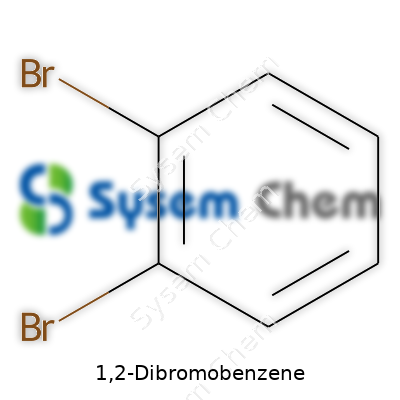
Ask an organic chemist about 1,2-dibromobenzene, and you’ll probably hear a lot about its role as a halogenated aromatic compound. But beneath the technical terms, it comes down to a simple arrangement: you start with benzene, a classic six-carbon ring, and attach two bromine atoms. The chemical formula ends up as C6H4Br2. Placing those bromine atoms at the first and second positions changes both how it reacts and how it’s used by chemists and manufacturers.
Everyday Impact of Seemingly Arcane Chemistry
Some folks might shrug at the mention of 1,2-dibromobenzene, but this compound has slipped into plenty of chemical syntheses in research and industry. I remember mixing aromatic halides during a college lab, the faint sweet-sour smell still stuck in my memory. Flasks filled with this sort of compound don’t just stay in academic spaces. They serve as building blocks for dyes, pesticides, and other industrial chemicals. Anytime someone tinkers with the structure of benzene, adding bromine atoms, it’s about pushing molecules to behave differently. This creates new tools for tackling real-world problems, from crop protection to new polymers.
It’s not hard to see why chemical structure gets so much attention. Move a bromine from position 2 to 3 or 4 on the ring, and you end up with a different molecule with its own quirks and hazards. The way those atoms sit on the ring decides how the compound reacts—something you learn quickly the first time a small reaction goes much faster than expected, or refuses to move at all.
The Importance of Knowing What’s on the Label
Labeling a container with “C6H4Br2” isn’t just about keeping the chemical closet organized. Using the right structure means manufacturers avoid costly mistakes or toxic byproducts in making medicines, plastics, or intermediates. Years ago, I saw a small manufacturing mix-up—one misplaced bromine meant an extra round of purification. Waste grows, safety risks increase, and costs go up fast if people don’t know exactly which version of dibromobenzene they’ve got.
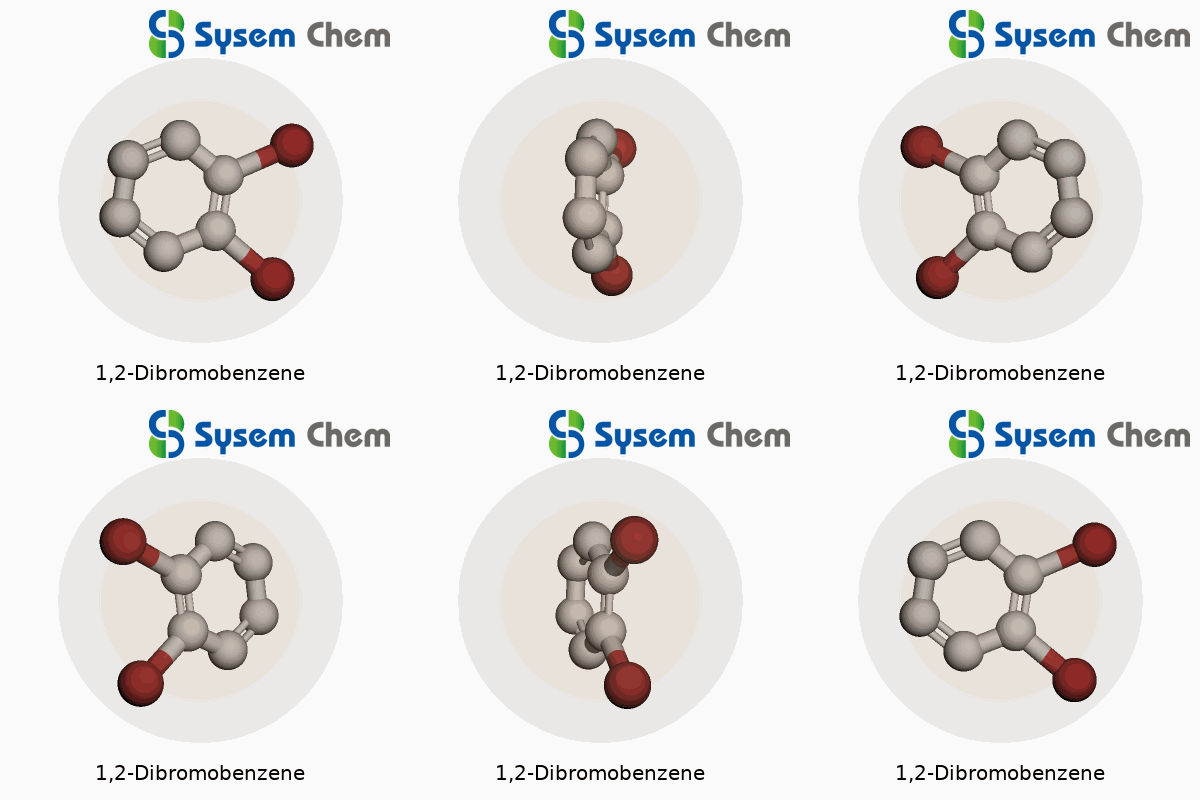
Anyone working with aromatic compounds owes it to themselves—and the community—to check structural formulas, not just trade names. Industry databases like PubChem and ChemSpider lay it out plainly: 1,2-dibromobenzene has a benzene ring, four hydrogens left after two spots are taken by bromine atoms. This structural specificity keeps labs, supply chains, and regulatory filings consistent and safe.
Working Toward Safer and Smarter Chemistry
People in labs and plants can’t afford to treat chemical names as trivia. Mistakes in structure recognition have led to recalls and even environmental incidents. Around the globe, chemists and regulators work off the same formulas to ensure environmental safety and occupational health standards. Countries regulate hazardous compounds based on their precise make-up, so one wrong label can lead to fines, plant shutdowns, or health risks no one wants to see.
Better education and clear communication stand out as the best ways forward. Simple visuals, accurate formulas on containers, and routine staff training add layers of protection. Teaching students not just what C6H4Br2 means, but why those numbers and letters matter, helps prepare the next wave of scientists and technicians to prevent future problems. In my own science classes, drawing out the ring for 1,2-dibromobenzene wasn’t busywork; it burned in the habit of checking, double-checking, and treating every chemical label like it could make or break the end result.
1,2-Dibromobenzene: What is It?
1,2-Dibromobenzene, sometimes called ortho-dibromobenzene, shows up as a clear, heavy liquid with a strong odor. Industries use it mainly as a chemical intermediate, often in pharmaceuticals and other organic syntheses. The casual observer probably hasn’t encountered it, but folks in labs or factories might have seen its heavy glass-like droplets firsthand.
Hazardous Nature of 1,2-Dibromobenzene
I've spent enough time around chemicals to know the sharp smell of halogenated benzene means business. 1,2-Dibromobenzene packs some risk. The vapor tends to irritate eyes and the respiratory tract if inhaled. That burning in the nose, the watery eyes, sudden cough – it reminds anyone in the lab to wear a mask and keep the fume hood running. Direct contact leaves skin red and sore, and getting it in your eyes means serious pain and possible injury.
Toxicity studies back up personal experience. According to the National Institute for Occupational Safety and Health (NIOSH), acute inhalation results in nausea, dizziness, and headaches. High doses can bring about more significant effects on the nervous system and liver. The substance isn't famous for being explosively toxic in small doses, but repeated or high exposures don’t do the body any favors.
The long-term health outcomes from chronic low-level exposure aren't as well known as benzene itself, but animal studies show liver and kidney damage and signs of carcinogenicity. The U.S. Environmental Protection Agency considers 1,2-dibromobenzene a possible carcinogen. If you think of that headachey feeling from sniffing lighter gasoline or paint thinner, multiply that by a few layers of risk—this is not something you’d want to inhale carelessly.
Environmental and Community Impact
Chemical spills never stay in the lab. From my time in industrial communities, I’ve seen how improper handling sends chemicals down drains and into rivers. While 1,2-dibromobenzene biodegrades slowly in soil and water, it can stick around long enough to hurt aquatic life. Fish exposed to even small amounts show behavioral changes and irritation. Birds and mammals higher up the food chain can accumulate these types of chemicals, raising concerns about food safety.
Incinerators struggle with halogenated benzenes – they produce heavy smoke and other toxic byproducts unless burned at high temperatures. This means disposal requires specialized setups. Poorly managed waste often leads to soil or groundwater contamination, which lingers far longer than most people expect.
Protecting Health and Safety
The right solution starts with controls at work—closed systems, ventilation, and personal protection. Local exhaust helps, and so does education. Workers need clear instructions, not just warning labels. Regular health monitoring allows doctors to catch exposure early, which makes an actual difference.
In neighborhoods near manufacturing plants, transparency pays off more than secrecy. Community groups push for tighter regulations, and businesses listening to those voices find better long-term outcomes. Environmental monitoring, soil and water checks, and real cleanup efforts do more than annual reports ever will.
Alternatives can reduce risk. In my experience, some companies already swap out halogenated benzenes for less hazardous reagents when possible, which cuts down on both workplace and environmental footprint. Innovation won’t solve every problem overnight, but it gives future generations a fighting chance.
Takeaway
1,2-Dibromobenzene serves a purpose in industry, but it carries hazards better taken seriously. Exposure brings health risks, both immediate and long-term, to workers and surrounding ecosystems. A culture of safety, honest communication, and ongoing research saves lives and protects communities.
Why Storage Matters for 1,2-Dibromobenzene
1,2-Dibromobenzene doesn’t get much attention outside labs, but its place in chemistry circles demands respect. This chemical comes with risks that can ruin a project, damage property, or hurt someone careless for even a moment. No one wants a nasty exposure, a leaky bottle, or a call to emergency services. Each step in the storage process matters—one slip-up, and lives or research goals get set back months.
Picking a Good Location
Experience shows that shoving bottles behind random boxes or stashing them under a bench never works out. Open containers of 1,2-dibromobenzene in a crammed spot raise the risk of broken glass and fumes drifting where they’re not welcome. Good practice starts with a locked chemical storage room. Well-ventilated rooms with sturdy shelving keep vapor risks low and make it easy to keep track of supplies. If the spot feels damp, warm, or cramped, find a better one. Dry, cool places with steady temperatures keep the chemical stable and stop surprises like cracked glass or swelling bottles.
Choosing Proper Containers
Glass with tight, chemical-resistant caps beats cheap plastic bottles every time for this compound. Most plastics either warp, leach chemicals, or get brittle—dangerous and messy. Glass lets you spot changes in the chemical right away, and labels stay readable after months. Every bottle deserves a tough, well-fitted label, and a “date received” marker so no one guesses how old something might be. Jobs in the lab get easier when anyone can identify what sits on the shelf.
Keeping Incompatibles Apart
Nobody wants to learn the hard way about chemical incompatibility. 1,2-Dibromobenzene and strong oxidizers mix about as well as matches and gasoline. One spill can turn minor issues into serious problems. Separate these chemicals, keeping acids, bases, and any oxidizers on different shelves or, better yet, in entirely different cabinets. I once saw a graduate student turn an afternoon into a scene from a fire safety video because someone left a poorly sealed bottle of nitric acid too close to an aromatic compound. Learn from others’ mistakes—don’t slot for convenience, slot for safety.
The Role of PPE and Training
Gloves, goggles, and lab coats block accidental splashes, but their real value comes when everyone treats them as standard, not optional. Familiarity with the chemical’s SDS (safety data sheet) matters more than others like to admit. Newcomers who skim these documents miss key facts. Teach everyone to check for leaks, wear the right gear, and review emergency procedures. I always push for short refreshers; forgetfulness breeds trouble.
What To Do With Old or Spilled Material
No one likes leftover bottles of questionable age or color. At the first sign of discoloration, weird sediment, or broken seals, it’s time to get rid of the stash. Partner with hazardous waste personnel who know their business. Trying to pour 1,2-dibromobenzene down the drain leads to environmental headaches, regulatory fines, or worse. Keep spill kits handy—absorbent pads, neutralizing agents, and the right disposal bags. A quick cleanup with proper oversight stops small slip-ups from becoming headline news.
Properties That Shape Everyday Use
1,2-Dibromobenzene, sometimes called ortho-dibromobenzene, stands out as a benzene ring carrying two bromine atoms. If you pull out a bottle of this compound in a lab, you won’t find anything flashy. It often appears as a colorless liquid, maybe with a faint yellow tint, especially if it’s been sitting around or exposed to air. The smell? Slightly aromatic, not overpowering.
Melting and Boiling Points: The Numbers Matter
Melting point and boiling point often decide how a chemical gets handled or transported. With 1,2-dibromobenzene, the melting point lands close to 21 degrees Celsius, which means at regular room temperature, you might find it partly solidifying if the day is chilly. Boiling happens at about 220 degrees Celsius. This relatively high boiling threshold limits rapid evaporation and suggests you won’t see clouds of vapor floating around if a bottle is left open for a bit.
In my own chemistry coursework, we learned early on that compounds like this—especially ones with two heavy bromine atoms—tend to act heavier than similar molecules. Lifting the bottle, you notice the density, and the data backs that up: about 1.98 grams per cubic centimeter. This is much heavier than water, which matters for tasks like separating layers in liquid-liquid extraction or even cleaning up accidental spills.
Solubility and Mixing: Why This Matters in Practice
Pour it into water, and you’ll see the two don’t mix. The solubility in water sits at less than half a milligram per milliliter. So if you need to clean equipment, don’t expect a simple water rinse to do the trick—you’ll have to reach for organic solvents like ethanol or ether. In industry settings, this property limits how much dibromobenzene gets loose in water systems, but any spill on the floor presents a clean-up challenge.
Vapor Pressure and Storage Safety
Handling chemicals with high vapor pressures always gives me pause. 1,2-dibromobenzene sits somewhere in the safer middle. At room temperature, the vapor pressure is around 0.13 mmHg, which isn’t much, but enough that you can smell it if there’s a spill. In practice, this means the risk of breathing in fumes isn’t too high, though common sense—good ventilation, gloves, and eye protection—remains necessary. The relatively low vapor pressure helps facilities store this liquid without heavy specialized equipment, cutting down costs.
Looking for Safer Alternatives
Every time I read a safety data sheet, my mind jumps to alternatives. 1,2-dibromobenzene shows moderate toxicity, and the potential for environmental harm—especially to aquatic life—remains high. This calls for careful tracking and safe disposal, which drives up expenses for both research labs and manufacturing plants. Some chemists turn to less hazardous brominated aromatics, but the choice depends on each process. Tighter storage controls, better training, and robust containment make a difference, even if the compound itself doesn’t scream danger at first glance.
Factoring Chemistry Into Safety and Research
You can’t ignore the numbers: melting points, boiling points, density, and solubility shape a chemist’s approach—whether separating, storing, or synthesizing new materials. Physical properties like these don’t just sit in a textbook; they drive real-world decisions. For researchers, improved labeling and live safety training keep risks down. In manufacturing, investing in sealed lines and better scrubbers helps limit environmental exposure, not just for legal reasons but for the practical good of workers and nearby communities.